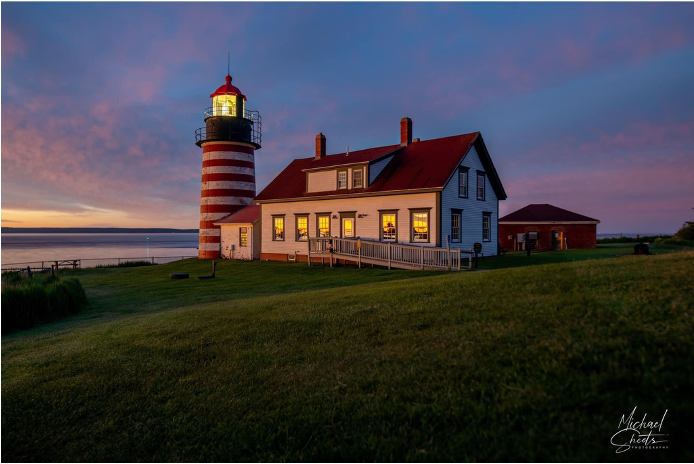
 Image 1 of 2
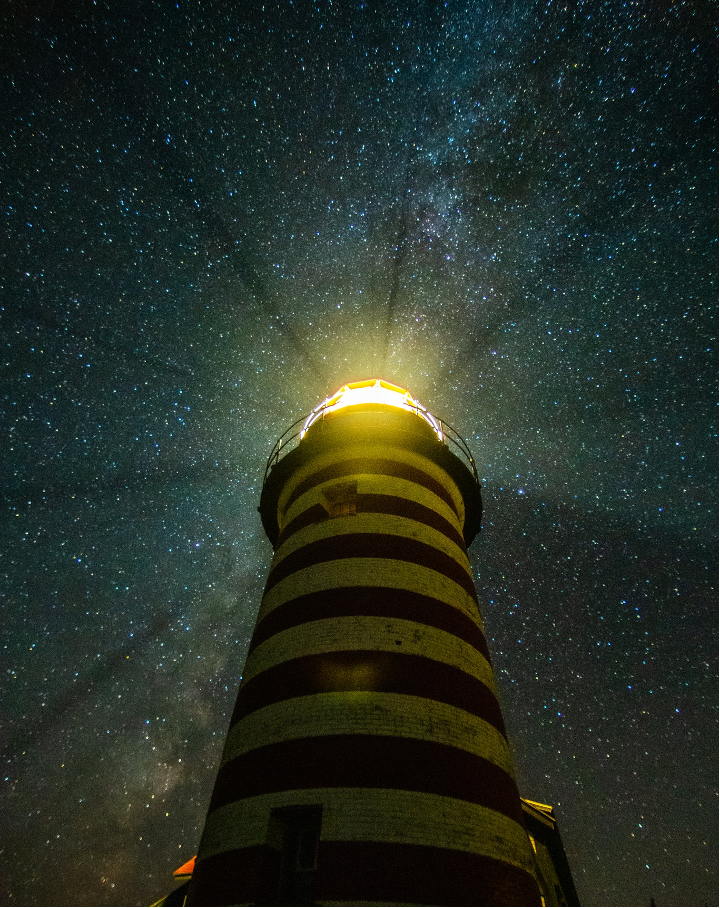 Image 2 of 2
Maine Lighthouse Tour
Astrophotography at Pemaquid Point & West Quoddy Head
Landscape at Marshall Point Lighthouse, Owls Head Lighthouse & Rockland Breakwater
Friday–Sunday, June 12-14, 2026
(timed to peak Milky Way visibility and minimal moon interference)
$875.00 per person ($400 Deposit Required)
Does not include travel insurance, meals, transportation, and lodging.
Duration:
2.5 Days / 2 Nights
(Evening, night, and daylight shooting sessions)
Skill Level:
Intermediate photographers with DSLR or mirrorless cameras
Manual mode and exposure triangle familiarity required.
Group Size:
Limited to 5 participants per instructor for personalized instruction
Create Images That Capture the Night, the Coast, and the Story Between
Learn to Photograph What Most People Never See
Astrophotography isn’t just about stars, it’s about place, patience, and presence. When the night sky meets the rugged Maine coast, the result is something rare with compelling images that feel grounded, expansive, and quietly powerful.
This workshop is designed to teach photographers to confidently capture the Milky Way alongside iconic Maine lighthouses, while also building strong daytime coastal landscape skills along the route. You’ll learn how to work calmly in the dark, balance artificial light with starlight, and create images that feel intentional, not accidental.
Perfect for photographers who want to move beyond guessing settings and start creating night images with clarity, confidence, and repeatable results.
This Workshop Is For
Photographers ready to explore astrophotography
Landscape photographers wanting to add night sky work to their portfolio
Photographers drawn to lighthouses, coastlines, and storytelling
Anyone who wants structured guidance in landscape and astrophotography
You Will Learn
By the end of this workshop, participants will be able to:
Confidently photograph the Milky Way without star tracking equipment
Manually focus lenses accurately in complete darkness
Balance lighthouse illumination with starlight exposure
Use foregrounds (rocks, cliffs, structures) to anchor night images
Choose settings based on intent, not guesswork
Scout and pre-visualize compositions during daylight for night shooting
Create clean, low-noise astrophotography files ready for editing
Develop a repeatable night-photography workflow usable anywhere
Workshop Outline
1. Seeing the Night Before It Arrives
Learn how successful night images are built before the sun goes down:
Reading the landscape for foreground potential
Understanding Milky Way position and seasonal movement
Planning compositions with horizon, structure, and sky balance
Safety, pacing, and working calmly in the dark
Daylight scouting at Pemaquid Point Lighthouse sets the foundation for the first night shoot.
2. Astrophotography Foundations (On Location)
Hands-on instruction covering:
Camera settings for stars (ISO, aperture, shutter speed)
Customized white balance for natural night color
Manual focus techniques that actually work
Avoiding blown highlights on lighthouse structures
Reducing noise through smart exposure choices
3. Night Shoot I – Pemaquid Point Lighthouse
Your first full astrophotography session includes:
Milky Way rising over the Atlantic
Lighthouse + rocky shoreline compositions
Individual coaching and real-time adjustments
Emphasis on calm repetition and confidence
This night builds your foundation.
4. Daylight Landscapes & Visual Discipline
As we travel north, daytime stops reinforce the same skills needed at night:
Marshall Point Lighthouse – leading lines and structure
Owls Head Lighthouse – elevation and layered coastal views
Rockland Breakwater – scale, repetition, and minimalist design
Focus areas include:
Compositional restraint
Visual flow and balance
Using light intentionally rather than reactively
5. Night Shoot II – West Quoddy Head Lighthouse
The easternmost lighthouse in the U.S. becomes your second astrophotography anchor:
Milky Way or star trail options (season dependent)
Refining technique with confidence
Exploring creative variations: silhouettes, negative space, scale
This night is about refinement and expression.
6. Editing for Night & Landscape Images
A guided post-processing session covers:
Exposure and contrast refinement
Managing color temperature in night skies
Enhancing detail without overprocessing
Cropping for stronger storytelling
You’ll see a complete edit—from RAW to finished image.
What to Bring
DSLR or mirrorless camera with full manual control
Wide-angle lens (14–24mm preferred; f/2–f/2.8 ideal)
Medium zoom lens, such as 24-70 mm
A telephoto lens, like a 70-200 mm lens (optional)
Tripod (required), shutter release optional but recommended
Headlamp (red light recommended)
Extra batteries and memory cards
Weather wear with appropriate layers
You Will Leave With
Finished astrophotography images featuring Maine iconic lighthouses
Strong coastal landscape photographs from daylight sessions
A clear, repeatable approach to night photography
Increased confidence working in low-light environments
A deeper understanding of light, patience, and visual storytelling
Instructors:
David Mazur is a photographer, educator, and founder of Seacoast Photography School, where he teaches photographers how to slow down, observe, and create images with intention.
With over 20 years of professional experience, David is known for his calm, grounded teaching style and his ability to make complex techniques feel approachable. His instruction emphasizes clarity over chaos, helping photographers understand why settings work, not just which numbers to use.
David’s night photography workshops focus on presence, preparation, and visual discipline. Rather than chasing gear or gimmicks, students learn to work confidently with the tools they already own creating images that feel both technically strong and emotionally grounded.
His philosophy is simple: the night rewards patience, not speed. Through guided repetition and thoughtful observation, David helps photographers build skills that last well beyond a single workshop.
Michael Sheets developed a profound fascination for night photography from a young age. Even in his early teens, he eagerly captured various nocturnal scenes using film, experimenting with different lighting perspectives. However, it was in 2018 that he stumbled upon the transformative capabilities of digital photography, which sparked his passion even further. It was during this time that he managed to capture a breathtaking image of the Nubble Light adorned by the ethereal Milky Way, forever cementing his devotion to the craft.
Since then, Mike has traversed the scenic landscapes from York to Acadia to Lubec, tirelessly seeking the ideal nocturnal backdrop to capture the mesmerizing night sky. Throughout his photographic journey, he has never ceased to find joy in his art, always embracing the thrilling experiences that accompany it.
Mike's teaching approach is characterized by interactivity and hands-on engagement. He firmly believes in providing immersive learning experiences to his students. You can join him on his captivating night workshops or opt for one-on-one lessons, where he imparts his knowledge of the enchanting world of photographing the night sky. Embark on this educational journey with him and discover the awe-inspiring wonders that await those who delve into the realm of night photography.
Accommodations:
Participants are responsible for lodging, transportation, and meals.
Pemaquid Lighthouse Accommodations Recommendations
· Hotel Pemaquid – Classic coastal lodging just ~0.2 miles from the lighthouse, with free parking and quick access to sunset and sunrise shoot of Pemaquid Lighthouse.
· The Bradley Inn- Charming inn also within a short walk (~0.3 miles). Free parking, known for comfortable rooms and a great base for exploring the Pemaquid Lighthouse.
West Quoddy Head Lighthouse Accommodations Recommendations
• The Eastland Motel – Highly rated motel with straightforward, comfortable rooms and easy access to the lighthouse area. Short drive or brisk walk options
• Peacock House Bed & Breakfast – Charming B&B with excellent reviews, located in Lubec’s historic district. Ideal for a cozy retreat after sunrise/sunset shoots.
• Eastern Beacon Inn – Well-reviewed inn in central Lubec, a short drive from the lighthouse and close to restaurants and shops.
• The Inn on the Wharf – Waterfront inn in Lubec itself; not as close as others to the lighthouse but positioned nicely on the water and convenient for evening/dawn expansion shoots.
Cancellation and Refund Policy:
A non-refundable deposit of $400.00 USD is required for registration. Final payment is due 30 days before the workshop's start. Deposits are non-refundable upon payment, except if your spot can be filled. A 50% credit of the deposit fee will apply to future workshops.
FOR ALL CANCELLATIONS YOU MUST EMAIL US AT INFO@SEACOASTPHOTOGRPAPHYSCHOOL.COM
LIMITED SPOTS AVAILABLE
Sign up now to reserve your spot.
Spaces are intentionally limited to ensure personalized instruction and a focused learning environment.
Join Seacoast Photography School for an immersive coastal experience that blends astrophotography, landscape mastery, and the quiet power of Maine’s night skies.
Questions:
Please email info@seacoastphotographyschool.com.
Astrophotography at Pemaquid Point & West Quoddy Head
Landscape at Marshall Point Lighthouse, Owls Head Lighthouse & Rockland Breakwater
Friday–Sunday, June 12-14, 2026
(timed to peak Milky Way visibility and minimal moon interference)
$875.00 per person ($400 Deposit Required)
Does not include travel insurance, meals, transportation, and lodging.
Duration:
2.5 Days / 2 Nights
(Evening, night, and daylight shooting sessions)
Skill Level:
Intermediate photographers with DSLR or mirrorless cameras
Manual mode and exposure triangle familiarity required.
Group Size:
Limited to 5 participants per instructor for personalized instruction
Create Images That Capture the Night, the Coast, and the Story Between
Learn to Photograph What Most People Never See
Astrophotography isn’t just about stars, it’s about place, patience, and presence. When the night sky meets the rugged Maine coast, the result is something rare with compelling images that feel grounded, expansive, and quietly powerful.
This workshop is designed to teach photographers to confidently capture the Milky Way alongside iconic Maine lighthouses, while also building strong daytime coastal landscape skills along the route. You’ll learn how to work calmly in the dark, balance artificial light with starlight, and create images that feel intentional, not accidental.
Perfect for photographers who want to move beyond guessing settings and start creating night images with clarity, confidence, and repeatable results.
This Workshop Is For
Photographers ready to explore astrophotography
Landscape photographers wanting to add night sky work to their portfolio
Photographers drawn to lighthouses, coastlines, and storytelling
Anyone who wants structured guidance in landscape and astrophotography
You Will Learn
By the end of this workshop, participants will be able to:
Confidently photograph the Milky Way without star tracking equipment
Manually focus lenses accurately in complete darkness
Balance lighthouse illumination with starlight exposure
Use foregrounds (rocks, cliffs, structures) to anchor night images
Choose settings based on intent, not guesswork
Scout and pre-visualize compositions during daylight for night shooting
Create clean, low-noise astrophotography files ready for editing
Develop a repeatable night-photography workflow usable anywhere
Workshop Outline
1. Seeing the Night Before It Arrives
Learn how successful night images are built before the sun goes down:
Reading the landscape for foreground potential
Understanding Milky Way position and seasonal movement
Planning compositions with horizon, structure, and sky balance
Safety, pacing, and working calmly in the dark
Daylight scouting at Pemaquid Point Lighthouse sets the foundation for the first night shoot.
2. Astrophotography Foundations (On Location)
Hands-on instruction covering:
Camera settings for stars (ISO, aperture, shutter speed)
Customized white balance for natural night color
Manual focus techniques that actually work
Avoiding blown highlights on lighthouse structures
Reducing noise through smart exposure choices
3. Night Shoot I – Pemaquid Point Lighthouse
Your first full astrophotography session includes:
Milky Way rising over the Atlantic
Lighthouse + rocky shoreline compositions
Individual coaching and real-time adjustments
Emphasis on calm repetition and confidence
This night builds your foundation.
4. Daylight Landscapes & Visual Discipline
As we travel north, daytime stops reinforce the same skills needed at night:
Marshall Point Lighthouse – leading lines and structure
Owls Head Lighthouse – elevation and layered coastal views
Rockland Breakwater – scale, repetition, and minimalist design
Focus areas include:
Compositional restraint
Visual flow and balance
Using light intentionally rather than reactively
5. Night Shoot II – West Quoddy Head Lighthouse
The easternmost lighthouse in the U.S. becomes your second astrophotography anchor:
Milky Way or star trail options (season dependent)
Refining technique with confidence
Exploring creative variations: silhouettes, negative space, scale
This night is about refinement and expression.
6. Editing for Night & Landscape Images
A guided post-processing session covers:
Exposure and contrast refinement
Managing color temperature in night skies
Enhancing detail without overprocessing
Cropping for stronger storytelling
You’ll see a complete edit—from RAW to finished image.
What to Bring
DSLR or mirrorless camera with full manual control
Wide-angle lens (14–24mm preferred; f/2–f/2.8 ideal)
Medium zoom lens, such as 24-70 mm
A telephoto lens, like a 70-200 mm lens (optional)
Tripod (required), shutter release optional but recommended
Headlamp (red light recommended)
Extra batteries and memory cards
Weather wear with appropriate layers
You Will Leave With
Finished astrophotography images featuring Maine iconic lighthouses
Strong coastal landscape photographs from daylight sessions
A clear, repeatable approach to night photography
Increased confidence working in low-light environments
A deeper understanding of light, patience, and visual storytelling
Instructors:
David Mazur is a photographer, educator, and founder of Seacoast Photography School, where he teaches photographers how to slow down, observe, and create images with intention.
With over 20 years of professional experience, David is known for his calm, grounded teaching style and his ability to make complex techniques feel approachable. His instruction emphasizes clarity over chaos, helping photographers understand why settings work, not just which numbers to use.
David’s night photography workshops focus on presence, preparation, and visual discipline. Rather than chasing gear or gimmicks, students learn to work confidently with the tools they already own creating images that feel both technically strong and emotionally grounded.
His philosophy is simple: the night rewards patience, not speed. Through guided repetition and thoughtful observation, David helps photographers build skills that last well beyond a single workshop.
Michael Sheets developed a profound fascination for night photography from a young age. Even in his early teens, he eagerly captured various nocturnal scenes using film, experimenting with different lighting perspectives. However, it was in 2018 that he stumbled upon the transformative capabilities of digital photography, which sparked his passion even further. It was during this time that he managed to capture a breathtaking image of the Nubble Light adorned by the ethereal Milky Way, forever cementing his devotion to the craft.
Since then, Mike has traversed the scenic landscapes from York to Acadia to Lubec, tirelessly seeking the ideal nocturnal backdrop to capture the mesmerizing night sky. Throughout his photographic journey, he has never ceased to find joy in his art, always embracing the thrilling experiences that accompany it.
Mike's teaching approach is characterized by interactivity and hands-on engagement. He firmly believes in providing immersive learning experiences to his students. You can join him on his captivating night workshops or opt for one-on-one lessons, where he imparts his knowledge of the enchanting world of photographing the night sky. Embark on this educational journey with him and discover the awe-inspiring wonders that await those who delve into the realm of night photography.
Accommodations:
Participants are responsible for lodging, transportation, and meals.
Pemaquid Lighthouse Accommodations Recommendations
· Hotel Pemaquid – Classic coastal lodging just ~0.2 miles from the lighthouse, with free parking and quick access to sunset and sunrise shoot of Pemaquid Lighthouse.
· The Bradley Inn- Charming inn also within a short walk (~0.3 miles). Free parking, known for comfortable rooms and a great base for exploring the Pemaquid Lighthouse.
West Quoddy Head Lighthouse Accommodations Recommendations
• The Eastland Motel – Highly rated motel with straightforward, comfortable rooms and easy access to the lighthouse area. Short drive or brisk walk options
• Peacock House Bed & Breakfast – Charming B&B with excellent reviews, located in Lubec’s historic district. Ideal for a cozy retreat after sunrise/sunset shoots.
• Eastern Beacon Inn – Well-reviewed inn in central Lubec, a short drive from the lighthouse and close to restaurants and shops.
• The Inn on the Wharf – Waterfront inn in Lubec itself; not as close as others to the lighthouse but positioned nicely on the water and convenient for evening/dawn expansion shoots.
Cancellation and Refund Policy:
A non-refundable deposit of $400.00 USD is required for registration. Final payment is due 30 days before the workshop's start. Deposits are non-refundable upon payment, except if your spot can be filled. A 50% credit of the deposit fee will apply to future workshops.
FOR ALL CANCELLATIONS YOU MUST EMAIL US AT INFO@SEACOASTPHOTOGRPAPHYSCHOOL.COM
LIMITED SPOTS AVAILABLE
Sign up now to reserve your spot.
Spaces are intentionally limited to ensure personalized instruction and a focused learning environment.
Join Seacoast Photography School for an immersive coastal experience that blends astrophotography, landscape mastery, and the quiet power of Maine’s night skies.
Questions:
Please email info@seacoastphotographyschool.com.