
We Don’t Take Photographs, We Provide Evidence of the Ephemeral
May 28, 2026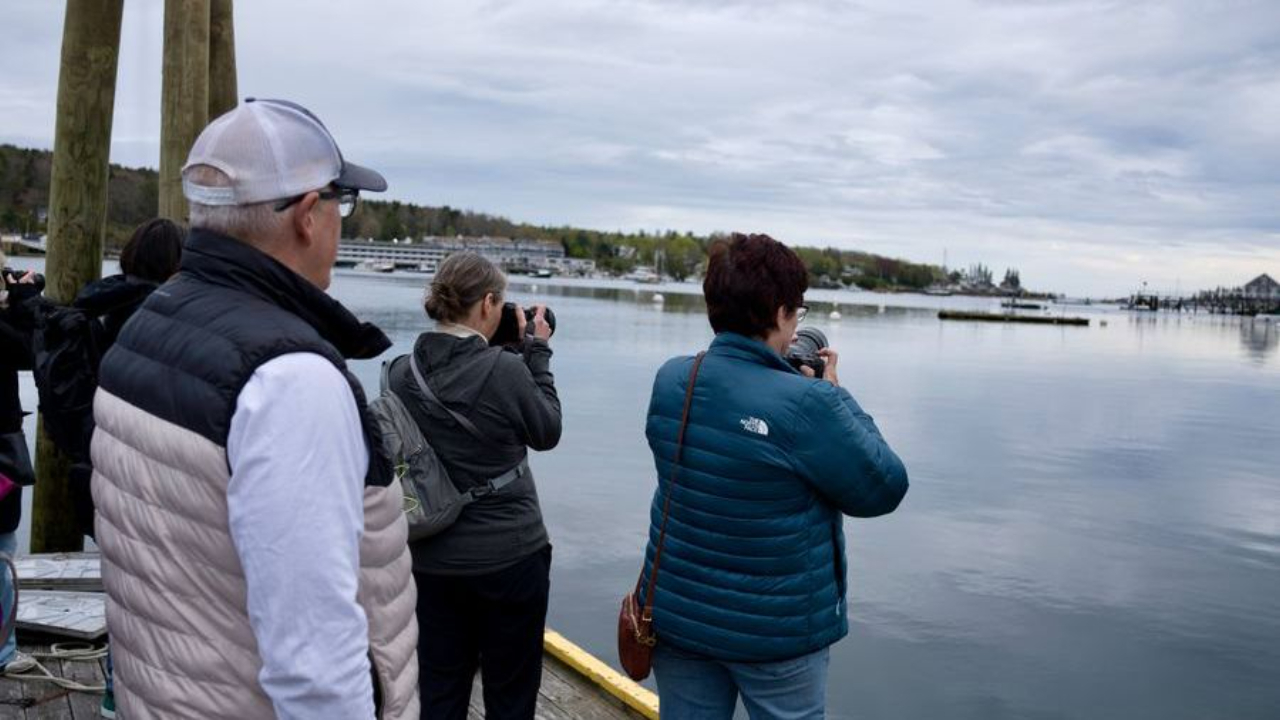
May 2026 Blog - By David Mazur
This past weekend, I had the pleasure of leading a workshop for 12 fun-loving people with another creative instructor. As with any photography outing, you spend hours planning every detail and photo op to create a rewarding and fulfilling educational experience. This is known as Plan A. The reality of unexpected events, El Niño migration shifts, dense cloud cover, unpredictable New England weather patterns, etc., welcomes Plan B.
This gave me a different perspective on each participant. I was able to slow down and observe the different perspectives and styles through which each person sees through the lens.
The modern world has confused photography with content.
Scroll through social media, and you’ll find an endless stream of sunsets, coffee cups, smiling couples, mountain overlooks, and perfectly curated moments competing for a fraction of a second of attention before disappearing into the algorithmic void. We take more photographs in two minutes today than humanity produced during the entire 19th century. Yet somehow, photography feels less meaningful than ever. Because most people aren’t making photographs anymore. They’re manufacturing proof they existed online.
The great photographers understood something fundamentally different:
Photography was never about documenting objects. It was about preserving the fleeting emotional experience of being alive inside a moment that could never happen again. The photograph itself is not the subject. Time is.
The Camera Is a Witness to Disappearance
When Henri Cartier-Bresson spoke about “The Decisive Moment,” he wasn’t talking about technical perfection. He was talking about the microscopic intersection where gesture, emotion, movement, light, and meaning briefly align before vanishing forever. Click…Gone! That moment will never repeat itself in the history of the universe. Photography, at its highest form, is evidence of impermanence.
Sally Mann understood this deeply in her haunting images of childhood and the American South. Sebastião Salgado documented disappearing cultures, labor systems, and environmental realities before globalization erased them. Vivian Maier unknowingly archived ordinary urban humanity that no longer exists in the same form today.
Even the great landscape photographers were never simply photographing scenery. Ansel Adams was photographing light that would never strike the land in precisely the same way again. The photograph becomes proof: “This happened once.”
Photography Is the Art of Paying Attention
Most people look. Very few actually see. Modern neuroscience tells us the brain filters enormous amounts of information every second through selective attention systems like the Reticular Activating System. In other words, reality is edited before we consciously experience it. Photography, when practiced intentionally, interrupts autopilot perception. It forces awareness.
Suddenly:
- You notice shadow transitions.
- Repetition.
- Gesture.
- Isolation.
- Emotional tension.
- Human vulnerability.
- Fleeting interactions.
- Light bouncing off surfaces for milliseconds.
The camera becomes less of a recording device and more of an excuse to observe life more deeply. This is why photography can become transformational for people later in life. Many students at SPS tell us the same thing after several weeks: “I never noticed these things before.” Exactly, photography trains presence.
The Great Photographers Didn’t Chase Subjects — They Chased Meaning
Study the master's long enough, and a pattern emerges. The greatest photographers were rarely obsessed with gear. They were obsessed with:
- mortality,
- memory,
- identity,
- isolation,
- belonging,
- beauty,
- suffering,
- time,
- and human contradiction.
Tara Sellios' photographs decay not because flowers are beautiful, but because decay reminds us that beauty itself is temporary. Diane Arbus photographed outsiders because she understood society often hides uncomfortable truths behind performance and normalcy. Alex Webb layers chaos, gesture, and fragmented human moments because real life itself is layered and unresolved. The camera is not the art. Perception is.
Every Photograph Is Already History
The second the shutter closes, the moment is gone.
The child grows older.
The building disappears.
The relationship changes.
The city transforms.
The person dies.
The light shifts.
The season ends.
Photography is fundamentally tied to loss. That may sound melancholic, but it’s actually what gives photography emotional power. A photograph matters precisely because life is temporary. If nothing changed, photographs would have no emotional value. This is why old family photographs affect us so deeply. They are not paper and ink, they are evidence that time existed differently once. Photography gives humans something evolution never prepared us for, the ability to pause disappearance.
At SPS, We Teach More Than Camera Settings
Yes, aperture matters. Shutter speed matters, composition matters.
But technical skill without awareness creates technically perfect empty images.
At Seacoast Photography School, we believe photography is ultimately about learning to see.
To slow down.
To observe.
To recognize emotional weight.
To notice transient beauty.
To become conscious of the ordinary before it disappears.
Because eventually, everything becomes archival. The great irony of photography is this: most people start photography trying to capture life, but the longer you study the medium, the more you realize photography is teaching you how to actually experience it.
We don’t take photographs. We provide evidence of the ephemeral.
Inspired? Step deeper into the experience. Explore our workshops, travel photography adventures, private sessions, and curated products designed to elevate your craft with confidence and clarity.
Enjoyed this article?
Join our newsletter for photography insights, class announcements, and creative inspiration delivered straight to your inbox.
We hate SPAM. We will never sell your information, for any reason.